
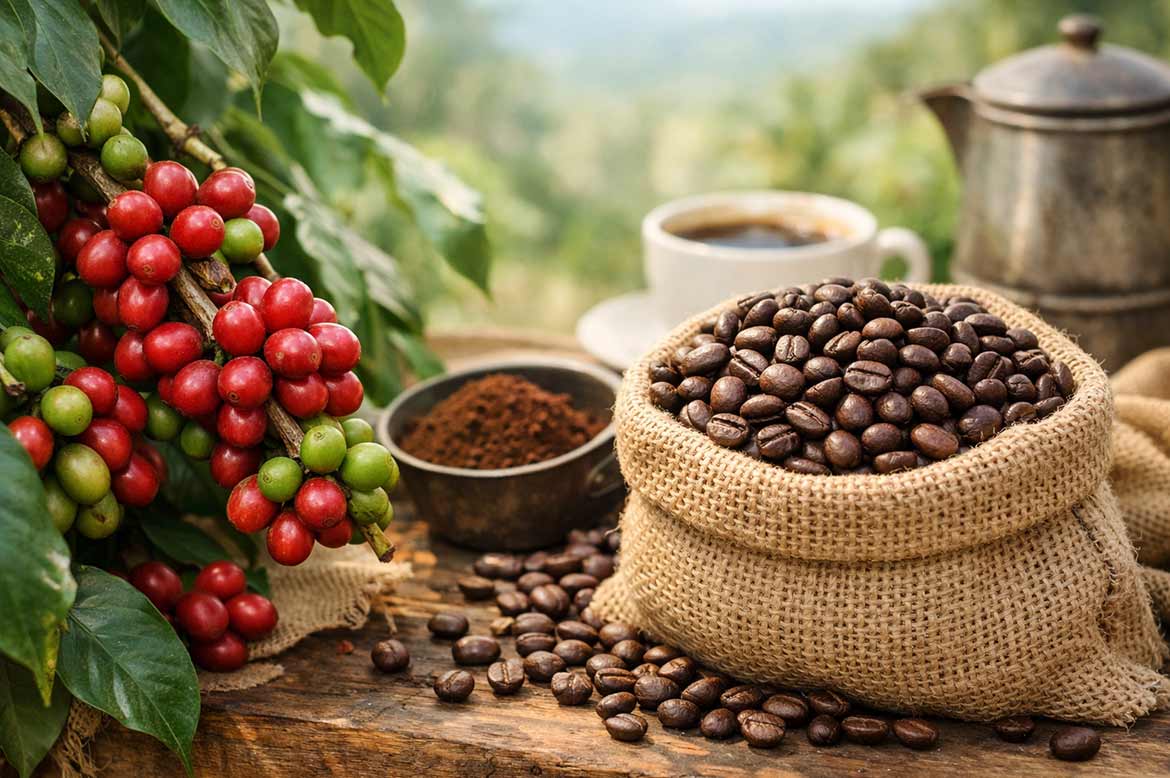
It’s bold, bitter, and often overlooked. But Robusta coffee is quietly fueling the global caffeine fix. You’ve probably tasted it—maybe without knowing. It’s in your instant coffee, your espresso blend, and sometimes even your energy drink. But what makes Robusta coffee so different from its smoother cousin, Arabica?
A Hardy Bean Built for Tough Conditions
Robusta coffee thrives where Arabica struggles. Unlike Arabica, which prefers high altitudes and cooler climates, Robusta grows in lowland tropical regions. It’s a tough plant—reaching up to 10 meters in height and resisting pests and diseases that often plague Arabica crops.
So why does this matter to your morning cup? Robusta’s resilience means higher yields and lower production costs. Farmers in Vietnam, Indonesia, and parts of Africa rely on Robusta for its reliability and profitability. Vietnam alone accounts for over 40% of global Robusta exports.
More Beans, More Buzz
Need a more decisive kick to start your day? Robusta delivers. Robusta coffee beans contain between 2.2% and 2.7% caffeine—nearly double the amount found in Arabica beans, which average 1.2% to 1.5%. This higher caffeine content not only boosts alertness but also acts as a natural pesticide, helping the plant survive in harsher environments.
But there’s a trade-off. Robusta coffee caffeine content contributes to its bitter, earthy flavor. It lacks the nuanced acidity and sweetness of Arabica, making it less popular among specialty coffee drinkers. Still, its bold profile is favored in espresso blends and instant coffee for its crema and punch.
Global Expansion and Economic Impact
Robusta is more than a bean—it’s an economic engine. In countries like Vietnam and Uganda, Robusta coffee supports millions of smallholder farmers. Its high yield and low maintenance make it a reliable cash crop, especially in regions vulnerable to climate change.
Indonesia and India also play key roles in Robusta production, while Brazil contributes to both the Arabica and Robusta markets. The bean’s adaptability to various soil types and climates has made it a staple in over 20 countries.
The Quality Myth
Think Robusta is inferior? That’s not the whole story. Many consumers associate Robusta with low-grade coffee. But that perception is shifting. Recent innovations in processing and roasting have elevated Robusta’s flavor potential. Specialty Robusta is gaining traction, especially in markets seeking sustainable and affordable alternatives.
In fact, some baristas now blend high-quality Robusta with Arabica to enhance body and crema in espresso. The result? A richer, more balanced cup that challenges traditional flavor hierarchies.
Climate Resilience
Is Robusta the future of coffee? As global temperatures rise, Arabica’s vulnerability becomes a growing concern. Robusta’s hardiness offers a lifeline. Studies suggest that Robusta could replace Arabica in regions where climate conditions are deteriorating.
Researchers are exploring hybrid varieties that combine Robusta’s resilience with Arabica’s flavor. These innovations could reshape the coffee landscape, ensuring a stable supply and protecting farmers’ livelihoods.
Future Outlook
Robusta coffee may not have the prestige of Arabica, but its role in the global coffee economy is undeniable. From its caffeine punch to its climate resilience, Robusta is poised to play a bigger part in your daily brew. As demand grows and environmental pressures mount, this bitter bean could become the backbone of the world’s coffee future.