
Dirty Coffee Recipe and Its Rise as a Global Café Trend
A visual sensation with bold flavor—dirty coffee is more than just a trend. But what makes this messy-looking drink so irresistible?
Dirty coffee has surged across social media and café menus, captivating coffee lovers with its dramatic layers and bold taste. From Tokyo’s Bear Pond Espresso to boutique cafés in Bangkok and Brooklyn, this two-ingredient drink is rewriting the rules of espresso culture.
But what exactly is a dirty coffee recipe—and why are so many people ditching their iced latte for it?
The Dirty Coffee Phenomenon
Dirty coffee isn’t just a quirky name. It’s a drink that combines hot espresso with ice-cold milk, poured in a way that creates swirling streaks and a “dirty” appearance. The result is a layered beverage that’s visually arresting and flavorfully complex.
Unlike traditional espresso drinks, dirty coffee isn’t stirred. That’s the point. The contrast between hot and cold, bitter and sweet, creates a sensory experience that’s meant to be enjoyed in a few bold sips.
Dirty coffee’s appeal lies in its visual drama and complex flavor profile, offering a fresh alternative to conventional espresso drinks.
Origins: From Tokyo to Trend
The dirty coffee recipe is widely believed to have originated at Bear Pond Espresso in Tokyo. Founder Katsuyuki Tanaka reportedly created the drink after a customer complained about a diluted iced latte. His solution? Pour hot espresso directly over cold milk—no ice, no stir.
The result was a drink with a bold espresso top and a creamy milk base. The name “dirty” came from the way the espresso stained the milk, creating a messy but beautiful visual.
Since then, the drink has spread across Asia, appearing in cafés in China, Thailand, and Singapore. In Korea, variations include whipped cream and cocoa powder overflowing from the cup. In the U.S., dirty chai—a blend of chai spices, milk, and espresso—has become a popular twist.
Dirty coffee’s global rise began in Japan, evolving through regional adaptations that highlight its versatility and visual appeal.
How to Make Dirty Coffee
The dirty coffee recipe is deceptively simple:
Chill a small glass (typically 8 fl oz / 230 mL).
Pour in cold milk—preferably full-fat or ice-block milk for density.
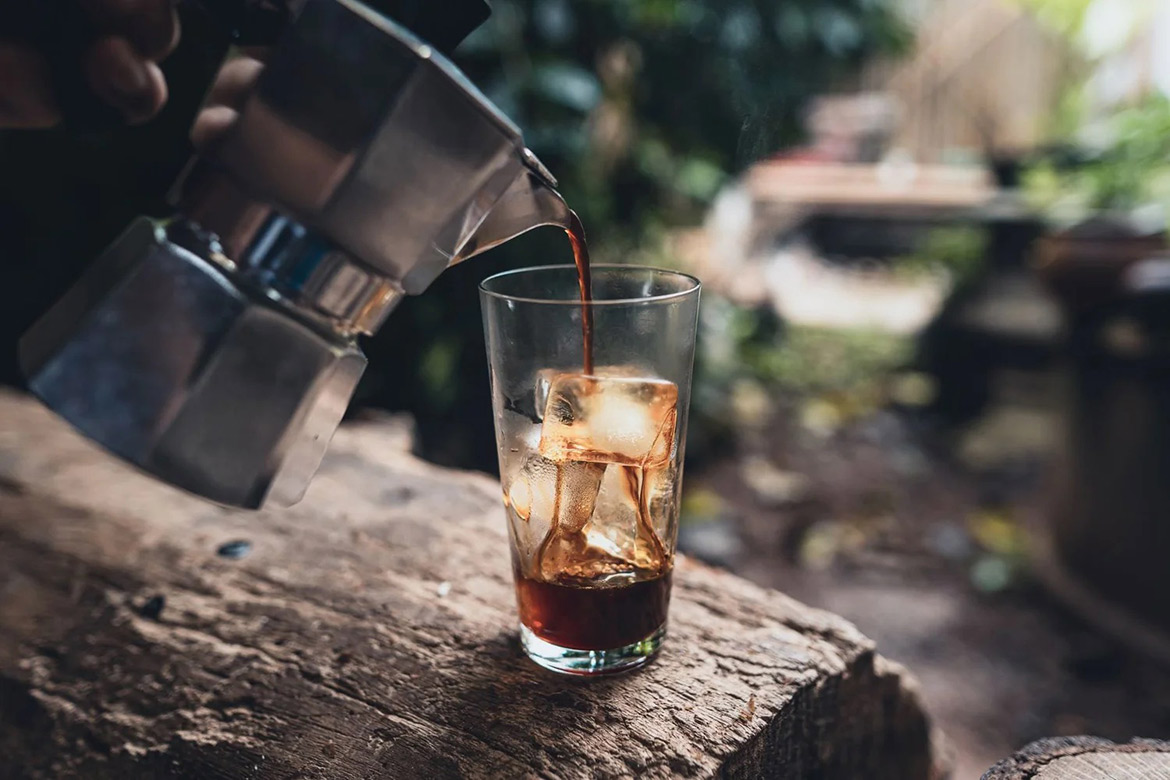
Slowly pour a double shot of espresso over the milk, using a spoon to diffuse the flow and preserve crema.
Some cafés pre-freeze the glass to enhance the temperature contrast. Others use single-origin beans to highlight the flavor of espresso. The key is minimal mixing—let the layers speak for themselves.
For optimal flavor contrast, dirty coffee is best consumed quickly in large sips. This allows drinkers to experience the bold espresso and chilled milk as distinct yet complementary elements.
To preserve the crema and prevent premature blending, baristas often raise the glass close to the espresso spout or use the back of a spoon to diffuse the pour gently. These techniques help maintain the drink’s signature streaked appearance and rich top layer.
Dirty coffee is crafted through careful layering of hot espresso over cold milk, with attention to temperature and texture.
Dirty vs. Iced Latte: What’s the Difference?
Though they share ingredients, dirty coffee and iced latte are fundamentally different:
| Feature | Dirty Coffee | Iced Latte |
| Milk | Ice-cold, no ice | Cold, with ice |
| Mixing | Minimal | Fully blended |
| Sweeteners | None | Often includes syrup |
| Cup Size | Small (8 oz / 230 mL) | Large (12 oz / 350 mL or more) |
| Beans | Single-origin | Often blends |
Dirty coffee emphasizes contrast and intensity. An iced latte offers a consistent and smooth experience. But if you wait too long to drink your dirty coffee, the layers blend—and the difference fades.
Dirty coffee and iced latte differ in preparation and presentation, but timing affects their flavor distinction.
Cultural Impact and Consumer Behavior
In the U.S., dirty coffee has gained traction among younger consumers who seek both aesthetic appeal and taste. Its dramatic look appeals to social media users, while its bold flavor satisfies espresso fans.
Dirty coffee has influenced consumer expectations in three key ways:
Visual appeal
Consumers now expect drinks to look as good as they taste.
Craftsmanship
Handcrafted beverages, such as dirty coffee, highlight the barista’s skill and personalization.
Flavor complexity
The layered taste encourages curiosity about bean origin and roast profiles.
Dirty coffee has reshaped consumer preferences, emphasizing visual design, craftsmanship, and flavor depth.
Variations: Dirty Chai and Beyond
Dirty coffee has inspired a range of spinoffs. One standout is the dirty chai—a blend of chai spices (cardamom, cinnamon, ginger, cloves, black pepper), milk, and espresso.
The complete spice profile often includes star anise and nutmeg, adding warmth and complexity to the drink. This fusion of South Asian tea culture and Western espresso technique has become a staple in many American cafés.
It’s a cross-cultural fusion that combines South Asian tea traditions with the intensity of Italian coffee.
Other versions include:
Korean-style dirty coffee: Topped with whipped cream and chocolate flakes.
American dirty coffee: Often served in minimalist glassware with no straw or spoon.
Iced dirty chai: A summer favorite that adds ice and extra spice.
Dirty coffee’s adaptability has led to global variations, each reflecting local tastes and café culture.
A Messy Masterpiece
Dirty coffee may look chaotic, but its rise is anything but accidental. From its humble beginnings in Tokyo to its global café takeover, the dirty coffee recipe has proven that simplicity, when executed with precision, can be revolutionary.
Its layered look, bold flavor, and cultural resonance make it more than a drink—it’s a statement. And as coffee culture continues to evolve, dirty coffee reminds us that sometimes, the best brews are the ones that break the rules.
Dirty coffee is a global phenomenon that blends artistry, flavor, and innovation—one messy sip at a time.
Unit Conversion Table
| Small cup size | 230 mL | 8 fl oz |
| Large cup size | 350 mL | 12 fl oz |
| Espresso shot | 30 mL | fl oz |