
Best Coffee Filter Materials and Pour-Over Brewing Analysis
Brewing Science Meets Daily Ritual
You’ve got your beans. You’ve nailed your grind size. But your coffee still tastes off. Could your filter be the culprit?
Coffee forums and specialty cafés have been buzzing about a subtle but powerful factor: filter material. A recent study found that heat retention during pour-over brewing can significantly alter flavor profiles—especially acidity and body.
So what’s the best coffee filter material for your morning ritual? Ceramic? Plastic? Metal? Glass? Let’s break it down.
Material Matters: Why Filter Type Changes Your Brew
Heat Retention and Extraction
The most overlooked factor in pour-over coffee is temperature stability. When hot water comes into contact with ground coffee, the rate at which heat dissipates affects the extraction process. If the temperature drops too quickly, acidity spikes, and the body thins out.
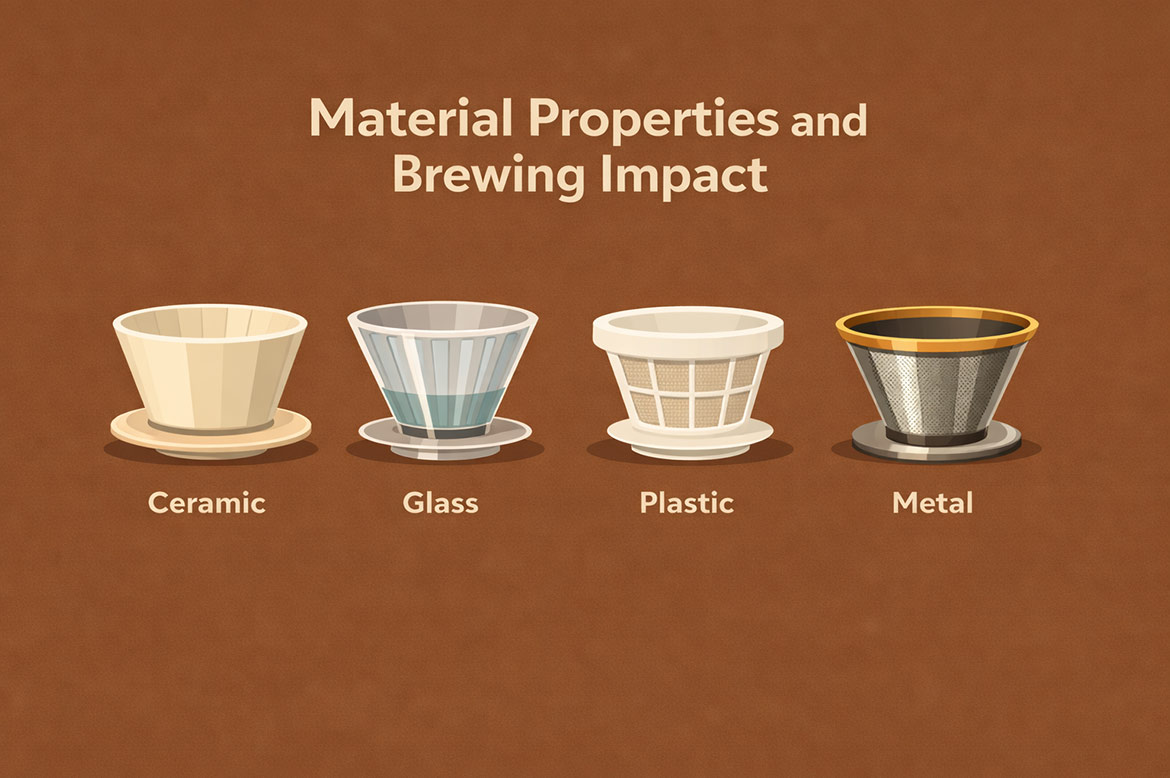
Ceramic filters have high specific heat capacity. They absorb heat from the water, causing a noticeable temperature drop during brewing.
Glass filters, while elegant, are heavy and fragile. They also absorb heat, though slightly less than ceramic.
Plastic filters are lightweight and absorb minimal heat, helping maintain a stable brewing temperature.
Metal filters conduct heat rapidly, which can lead to faster cooling as heat escapes into the surrounding air.
Heat retention is crucial. Plastic filters surprisingly outperform other materials at maintaining water temperature during the pour-over coffee process.
Scientific Breakdown: Specific Heat vs. Thermal Conductivity
Let’s get technical. Two properties define how a filter material interacts with heat:
Specific Heat Capacity: How much heat a material absorbs.
Thermal Conductivity: How fast heat moves through the material.
Ceramic filters have high heat capacity and low conductivity, absorbing heat and lowering water temperature.
Glass filters have moderate heat capacity and low conductivity, similar to ceramic but more fragile. Plastic filters have low heat capacity and very low conductivity, helping retain heat and stabilize water temperature.
Metal filters exhibit low heat capacity and high thermal conductivity, resulting in rapid heat loss to the surrounding air.
Plastic filters retain heat best, while ceramic and glass benefit from preheating to prevent flavor loss.
Portability and Durability: Beyond the Brew
While flavor is king, lifestyle matters too.
Plastic and silicone filters are lightweight and ideal for travel.
Ceramic and glass offer durability but are prone to breakage.
Metal filters are sturdy and long-lasting but may scratch or dent over time.
For coffee on the go, plastic wins. For home brewing, ceramic and metal offer longevity, albeit with trade-offs.
Preheating: A Simple Fix for Heat Loss
If you love ceramic or glass filters, don’t worry. Preheating with hot water can offset their heat absorption.
Preheating ceramic filters reduced temperature loss by up to 40%, resulting in smoother extraction and balanced acidity.
Preheating ceramic or glass filters helps preserve water temperature and flavor integrity.
Which Filter Should You Choose?
There’s no one-size-fits-all answer. But if you’re chasing consistency, especially in pour-over coffee, plastic filters offer the best balance of heat retention, portability, and affordability.
Ceramic and glass filters shine in aesthetics and durability—if you’re willing to preheat. Metal filters are suitable for fast brews but may compromise temperature control.
Choose based on your brewing style, lifestyle, and flavor preferences. The best coffee filter material depends on what matters most to you.
Material Properties and Brewing Impact
| Material | Specific Heat Capacity | Thermal Conductivity | Impact on Brew |
| Ceramic | High | Low | Absorbs heat, lowers water temperature |
| Glass | Moderate | Low | Similar to ceramic, fragile |
| Plastic | Low | Very Low | Retains heat in water, stable temperature |
| Metal | Low | High | Rapid heat loss to air |