
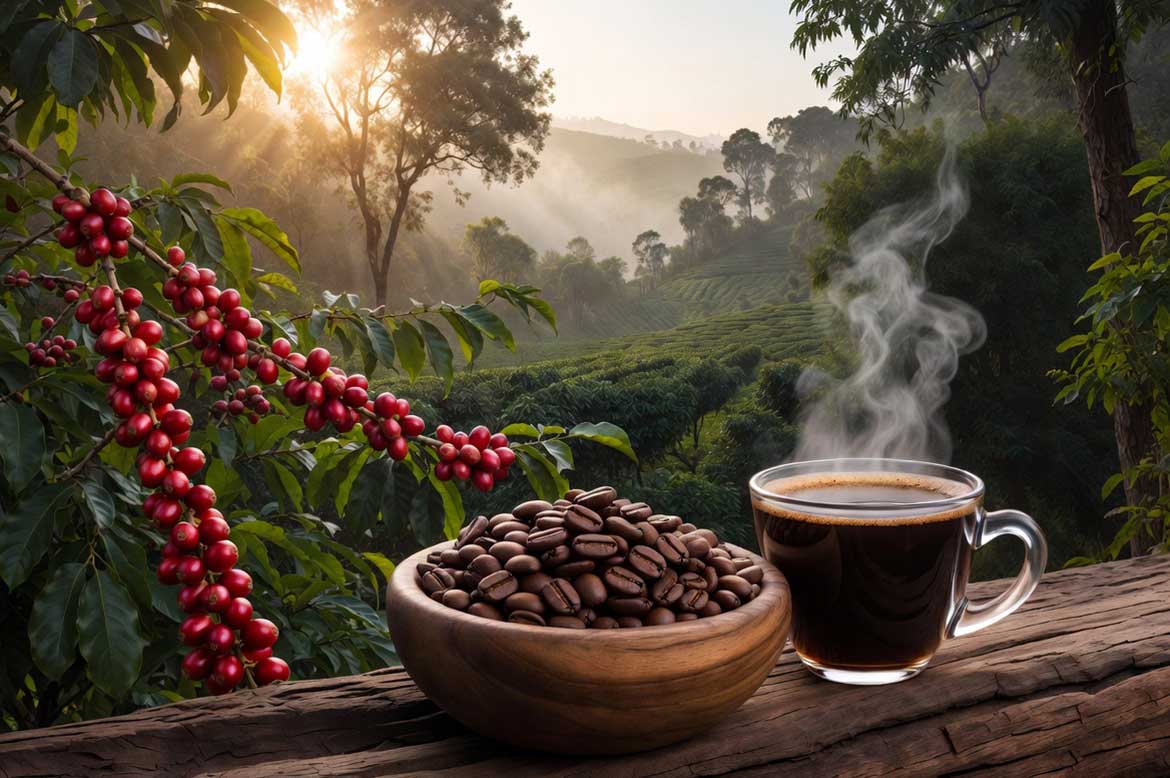
Arabica Coffee: From Ethiopian Forests to Global Fame
It’s the world’s favorite brew—but how much do we really know about Arabica coffee? You sip it every morning. You order it without thinking. But where did it come from, and why does it dominate the global coffee scene?
The Rise of Arabica Coffee
Arabica coffee is more than just a morning ritual—it’s a botanical marvel. Of the 100-plus species in the Coffea genus, only two dominate global consumption: Arabica and Robusta. Arabica coffee accounts for 60-70% of global production, prized for its smooth flavor and lower caffeine content.
So why does Arabica reign supreme? Its journey began in the lush forests of southwestern Ethiopia. Historians trace the earliest cultivation to Yemen, where coffee seeds were first domesticated and traded across the Arabian Peninsula. From there, Arabica coffee spread to India, Indonesia, and eventually Europe, shaping centuries of trade and culture.
Genetic Roots: Bourbon and Typica Lineages
What makes Arabica coffee so unique? Scientists have traced its genetic heritage to two primary lineages: Bourbon and Typica. These lineages form the backbone of modern Arabica coffee varieties. Bourbon is known for its sweet, complex flavor, while Typica offers a clean, balanced profile. Together, they’ve given rise to dozens of cultivars adapted to different climates and altitudes.
Recent genetic fingerprinting confirms that the origin of Arabica coffee lies in these two lineages, which were selected and cultivated by farmers over the centuries. This genetic diversity is key to Arabica’s resilience and flavor complexity.
Brazil’s Dominance and Global Spread
Is your coffee Brazilian? Chances are, yes. Brazil is the world’s largest producer of Arabica coffee, accounting for over 35 percent of global output. Its vast plantations and favorable climate make it ideal for large-scale cultivation. But Arabica coffee isn’t just a Brazilian affair.
It’s grown across Latin America—from Colombia’s highlands to Guatemala’s volcanic soils. East Africa, India, and parts of Indonesia also contribute to the global supply chain. Each region imparts distinct flavor notes, influenced by altitude, soil, and processing methods. This phenomenon coffee enthusiasts call the “terroir effect”
Debunking the Robusta Myth
Is Robusta stronger and better for espresso? Not always. While Robusta beans contain more caffeine and are often used in instant coffee, they lack the nuanced flavor of Arabica. Many consumers assume strength equals quality—but Arabica’s lower bitterness and aromatic complexity make it the preferred choice for specialty brews.
In fact, the Specialty Coffee Association ranks Arabica beans higher in cupping scores, favoring their acidity, body, and flavor clarity.
Arabica’s Economic and Cultural Impact
Coffee isn’t just a drink—it’s an economic lifeline. Arabica coffee supports millions of smallholder farmers worldwide. In Ethiopia alone, coffee accounts for over 30 percent of export earnings. In Colombia, it’s a national symbol, woven into the country’s identity and rural economy.
The global demand for Arabica has also spurred innovation in sustainable farming, climate adaptation, and fair trade practices. As climate change threatens coffee-growing regions, Arabica’s genetic diversity may offer solutions for future resilience.
Challenges Ahead: Climate and Disease
Is Arabica coffee at risk? Yes. Arabica is sensitive to temperature shifts and vulnerable to diseases like coffee leaf rust. Rising global temperatures could reduce suitable growing areas by up to 50 percent by 2050.
Researchers are now exploring hybrid varieties and shade-grown techniques to protect Arabica’s future. Genetic research into Bourbon and Typica lineages may unlock new resistance traits.
A Brew with Deep Roots
Arabica coffee isn’t just a beverage—it’s a story of migration, adaptation, and global connection. From Ethiopian forests to Brazilian plantations, its journey reflects centuries of human ingenuity and cultural exchange.