
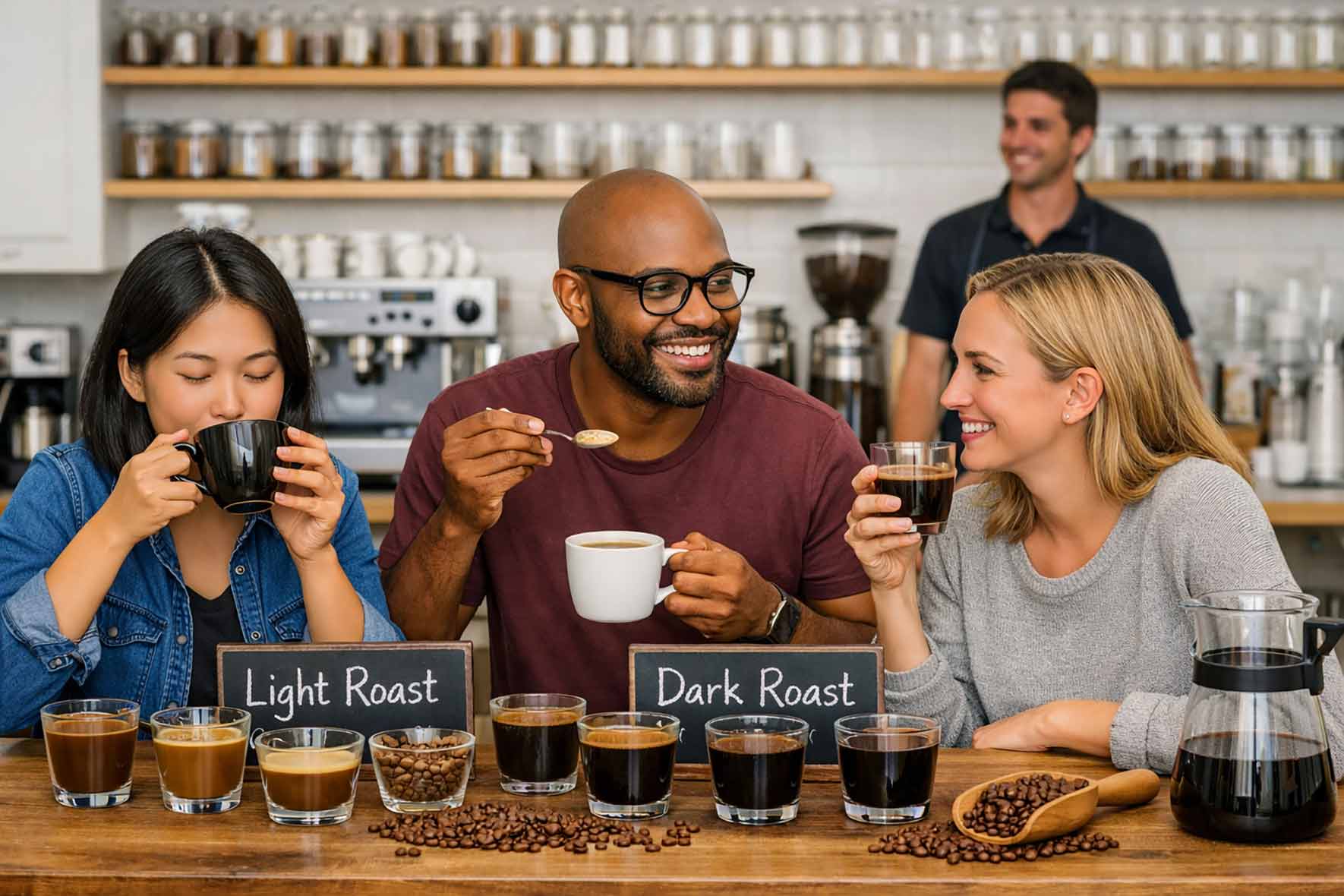
Dark Roast Caffeine Content: Myth or Reality?
A new study has reignited debate over caffeine levels in different coffee roasts. Roast level may not be the caffeine game-changer many believe it to be. But if dark roast tastes stronger, shouldn’t it also deliver a bigger energy kick?
You’ve probably asked yourself this: “Should I switch to dark roast for a stronger caffeine hit?” Or maybe you’ve wondered why your light roast seems to keep you buzzing longer. Let’s break down the science, the misconceptions, and what it means for your morning brew.
Why Roast Level Doesn’t Always Equal Caffeine Strength
Many coffee drinkers assume that a darker roast means more caffeine. The logic seems sound—stronger flavor, bolder taste, more caffeine. But scientific research tells a different story.
A study published by the Specialty Coffee Association found that caffeine content remains remarkably stable across roast levels. Whether beans are lightly roasted or deeply charred, the caffeine molecule itself is heat-resistant. That means the dark roast caffeine content is not inherently higher than that of lighter roasts.
Despite popular belief, roasting doesn’t burn off or increase caffeine. The compound survives the roasting process almost unchanged.
The Real Reason Caffeine Varies Between Roasts
So why do some cups feel stronger than others? It’s not the roast—it’s the bean’s physical transformation during roasting.
As coffee beans undergo extended roasting, they expand, lose moisture, and become less dense. Consequently, a scoop of dark roast contains fewer beans by weight compared to a scoop of light roast. When measuring coffee by volume (e.g., using a tablespoon or scoop), dark roast yields less caffeine because it contains fewer beans per scoop.
An experiment by the International Coffee Organization found that 15 grams of light roast typically contains about 120 beans, whereas dark roast may require up to 140 beans. This means that the caffeine content in 120 light roast beans is equal to that in 140 dark roast beans.
However, if you measure using a fixed-volume tool like a tablespoon or scoop, the larger size of dark roast beans means fewer beans (i.e., a lower bean density) per scoop, resulting in lower caffeine intake than with light roast.
Measuring method matters. Volume-based scoops favor light roast; weight-based measurements give dark roast a slight edge.
How Brewing Method and Bean Type Affect Caffeine
Roast level isn’t the only factor. The brewing method and bean variety also play significant roles in determining coffee quality.
Brewing method: Espresso, drip, French press—all extract caffeine differently. Espresso may seem stronger due to concentration, but an 8-oz (237 mL) drip coffee often contains more total caffeine.
Bean type: Robusta beans have nearly twice the caffeine of Arabica beans. Most specialty coffees utilize Arabica beans, but blends may vary.
If we experiment, light roast Arabica brewed via the drip method yields approximately 95–105 mg of caffeine per 8-oz cup. Dark roast brewed the same way yields 80–100 mg. However, espresso shots (1 fl oz or 30 mL) typically contain 60–65 mg of caffeine, regardless of roast.
Aside from decaffeinated coffee, the caffeine differences among roast levels are generally minor and not worth overanalyzing.
Roast level is just one piece of the puzzle. Brewing style and bean type can significantly alter caffeine levels.
Should You Choose Roast Based on Caffeine?
Not necessarily. Unless you’re drinking decaf, most coffee roasts deliver enough caffeine to wake you up. The differences are minor and often overshadowed by taste preferences.
Experts suggest choosing roast based on flavor, not caffeine. Light roasts offer bright acidity and fruity notes. Medium roasts strike a balance. Dark roasts deliver bold, smoky flavors.
After all, coffee is meant to be tasted and enjoyed—not consumed like some “energy potion.”
Ultimately, coffee is a beverage to enjoy—not a caffeine delivery system. If you love the taste of dark roast, go for it. Just don’t expect it to be a “stronger” brew in terms of caffeine.
Flavor should guide your roast choice. Caffeine differences are minimal unless you’re measuring beans precisely.
The Caffeine Myth Behind Coffee Roast Levels
The idea that dark roast coffee contains more caffeine is a persistent myth. In reality, caffeine levels remain stable across roast types. What changes are in bean density, volume, and how we measure our coffee?
So next time you’re choosing between light, medium, or dark roast, ask yourself: What flavor do I crave? Because when it comes to caffeine, the roast level won’t make or break your buzz.